|
|
| (318 intermediate revisions by the same user not shown) |
| Line 1: |
Line 1: |
| − | ==Remediation of Stormwater Runoff Contaminated by Munition Constituents== | + | ==PFAS Leaching Characterization with the Leaching Environmental Assessment Framework (LEAF)== |
| − | Past and ongoing military operations have resulted in contamination of surface soil with [[Munitions Constituents | munition constituents (MC)]], which have human and environmental health impacts. These compounds can be transported off site via stormwater runoff during precipitation events. Technologies to “trap and treat” surface runoff before it enters downstream receiving bodies (e.g., streams, rivers, ponds) (see Figure 1), and which are compatible with ongoing range activities are needed. This article describes a passive and sustainable approach for effective management of munition constituents in stormwater runoff.
| + | [[Wikipedia: Firefighting_foam#Synthetic_foams | Aqueous film-forming foams (AFFFs)]] are a major source of [[Perfluoroalkyl and Polyfluoroalkyl Substances (PFAS) | per- and poly-fluoroalkyl substances (PFAS)]] impacts in soil and groundwater. Standardized tools are needed to rapidly assess the potential for retention, leaching, and transport of PFAS from the source zone to downgradient regions, so that this information can be applied towards critical facets of site management such as prioritizing PFAS-impacted sites for further investigation and remediation. Existing standard leaching methods were developed prior to concerns regarding PFAS. Therefore, studies are needed to ensure that leaching methods are compatible for use with PFAS and that resulting data are representative of the risk of PFAS leaching at impacted sites. |
| | <div style="float:right;margin:0 0 2em 2em;">__TOC__</div> | | <div style="float:right;margin:0 0 2em 2em;">__TOC__</div> |
| | | | |
| | '''Related Article(s):''' | | '''Related Article(s):''' |
| | | | |
| − | *[[Munitions Constituents]] | + | *[[Perfluoroalkyl and Polyfluoroalkyl Substances (PFAS)]] |
| | + | *[[PFAS Sources]] |
| | + | *[[PFAS Transport and Fate]] |
| | | | |
| | + | '''Contributors:''' Dr. Jennifer L. Guelfo, Dr. David Kosson, Dr. Andy Garrabrants, Ms. Fangfei Liu, Mr. Darlington Yawson, Dr. Md. Isreq Real |
| | | | |
| − | '''Contributor:''' Mark E. Fuller | + | '''Key Resources:''' |
| | + | *Development of Leaching Tests for Materials Containing SVOCs and PFAS, EPA 600/R-23/382<ref name="GarrabrantsEtAl2024"/> |
| | | | |
| − | '''Key Resource(s):'''
| + | *[https://www.epa.gov/hw-sw846/leaching-environmental-assessment-framework-leaf-methods-and-guidance Leaching Environmental Assessment Framework (LEAF) Methods and Guidance] (EPA website) |
| − | *SERDP Project ER19-1106: Development of Innovative Passive and Sustainable Treatment Technologies for Energetic Compounds in Surface Runoff on Active Ranges
| |
| | | | |
| − | ==Background== | + | ==Introduction to LEAF== |
| − | ===Surface Runoff Characteristics and Treatment Approaches===
| + | The [https://www.epa.gov/ U.S. Environmental Protection Agency (EPA)] [https://www.epa.gov/hw-sw846/leaching-environmental-assessment-framework-leaf-methods-and-guidance Leaching Environmental Assessment Framework (LEAF)] is a suite of standardized test methods for evaluating contaminant release from solids under environmentally relevant conditions (Table 1). The four leaching methods within LEAF were originally validated for inorganic constituents<ref>Garrabrants, A.C., Kosson, D.S., Stefanski, L., DeLapp, R., Seignette, P.F.A.B., van der Sloot, H.A., Kariher, P., Baldwin, M., 2012. Interlaboratory Validation of the Leaching Environmental Assessment Framework (LEAF) Method 1313 and Method 1316, EPA/600/R-12/623, U.S. Environmental Protection Agency, Air Pollution and Control Division. [[Media: EPA 600_R-12_623.pdf | Free Download EPA 600/R-12/623]]</ref><ref>Garrabrants, A.C., Kosson, D.S., DeLapp, R., Kariher, P., Seignette, P.F.A.B., van der Sloot, H.A., Stefanski, L., Baldwin, M., 2012. Interlaboratory Validation of the Leaching Environmental Assessment Framework (LEAF) Method 1314 and Method 1315, EPA/600/R-12/624, U.S. Environmental Protection Agency, Air Pollution and Control Division. [[Media: EPA 600_R-12_624.pdf | Free Download EPA 600/R-12/624]]</ref> and included as standard leaching methods EPA 1313 – 1316 within Update V of SW-846<ref>USEPA, 2026. Hazardous Waste Test Methods / SW-846. [https://www.epa.gov/hw-sw846 USEPA SW-846 website]</ref>. To address the need for standardized tests to evaluate PFAS leaching and mobility, LEAF methods have been optimized and demonstrated for use with PFAS (Methods 1313A-1316A)<ref name="GarrabrantsEtAl2024">Garrabrants, A.C., Liu, F., Warne, R., DeLapp, R., Brown, L., Rubin, Z., Yawson, D., Kosson, D.S., Guelfo, J.L., Real, M.I., van der Sloot, H.A., Touati, A., Thorneloe, S., 2024. Development of Leaching Tests for Materials Containing SVOCs and PFAS, EPA 600/R-23/382, USEPA, Washington, D.C. [[Media: EPA 600_R-23_382.PDF | Free Download EPA 600/R-23/382]]</ref>. This article will focus on Methods 1313A, 1314A, and 1316A. Demonstration of Method 1315A for compacted granular materials (including concrete and asphalt) is ongoing. |
| − | [[File: FullerFig1.png | thumb | 400 px | Figure 1. Conceptual model of passive trap and treat approach for MC removal from stormwater runoff]] | |
| − | During large precipitation events the rate of water deposition exceeds the rate of water infiltration, resulting in surface runoff (also called stormwater runoff). Surface characteristics including soil texture, presence of impermeable surfaces (natural and artificial), slope, and density and type of vegetation all influence the amount of surface runoff from a given land area. The use of passive systems such as retention ponds and biofiltration cells for treatment of surface runoff is well established for urban and roadway runoff. Treatment in those cases is typically achieved by directing runoff into and through a small constructed wetland, often at the outlet of a retention basin, or via filtration by directing runoff through a more highly engineered channel or vault containing the treatment materials. Filtration based technologies have proven to be effective for the removal of metals, organics, and suspended solids<ref>Sansalone, J.J., 1999. In-situ performance of a passive treatment system for metal source control. Water Science and Technology, 39(2), pp. 193-200. [https://doi.org/10.1016/S0273-1223(99)00023-2 doi: 10.1016/S0273-1223(99)00023-2]</ref><ref>Deletic, A., Fletcher, T.D., 2006. Performance of grass filters used for stormwater treatment—A field and modelling study. Journal of Hydrology, 317(3-4), pp. 261-275. [http://dx.doi.org/10.1016/j.jhydrol.2005.05.021 doi: 10.1016/j.jhydrol.2005.05.021]</ref><ref>Grebel, J.E., Charbonnet, J.A., Sedlak, D.L., 2016. Oxidation of organic contaminants by manganese oxide geomedia for passive urban stormwater treatment systems. Water Research, 88, pp. 481-491. [http://dx.doi.org/10.1016/j.watres.2015.10.019 doi: 10.1016/j.watres.2015.10.019]</ref><ref>Seelsaen, N., McLaughlan, R., Moore, S., Ball, J.E., Stuetz, R.M., 2006. Pollutant removal efficiency of alternative filtration media in stormwater treatment. Water Science and Technology, 54(6-7), pp. 299-305. [https://doi.org/10.2166/wst.2006.617 doi: 10.2166/wst.2006.617]</ref>.
| |
| | | | |
| − | ===Surface Runoff on Ranges=== | + | {| class="wikitable" style="float:right; margin-left:10px;" |
| − | [[File: FullerFig2.png | thumb | 400 px | Figure 2. Conceptual illustration of munition constituent production and transport on military ranges. Mesoscale residues are qualitatively defined as being easily visible to the naked eye (e.g., from around 50 µm to multiple cm in size) and less likely to be transported by moving water. Microscale residues are defined as <50 µm down to below 1 µm, and more likely to be entrained in, and transported by, moving water as particulates. Blue arrows represent possible water flow paths and include both dissolved and solid phase energetics. The red vertical arrow represents the predominant energetics dissolution process in close proximity to the residues due to precipitation.]]
| + | |+Table 1. EPA SW-846 methods that comprise the LEAF framework |
| − | Surface runoff represents a major potential mechanism through which energetics residues and related materials are transported off site from range soils to groundwater and surface water receptors (Figure 2). This process is particularly important for energetics that are water soluble (e.g., [[Wikipedia: Nitrotriazolone | NTO]] and [[Wikipedia: Nitroguanidine | NQ]]) or generate soluble daughter products (e.g., [[Wikipedia: 2,4-Dinitroanisole | DNAN]] and [[Wikipedia: TNT | TNT]]). While traditional MC such as [[Wikipedia: RDX | RDX]] and [[Wikipedia: HMX | HMX]] have limited aqueous solubility, they also exhibit recalcitrance to degrade under most natural conditions. RDX and [[Wikipedia: Perchlorate | perchlorate]] are frequent groundwater contaminants on military training ranges. While actual field measurements of energetics in surface runoff are limited, laboratory experiments have been performed to predict mobile energetics contamination levels based on soil mass loadings<ref>Cubello, F., Polyakov, V., Meding, S.M., Kadoya, W., Beal, S., Dontsova, K., 2024. Movement of TNT and RDX from composition B detonation residues in solution and sediment during runoff. Chemosphere, 350, Article 141023. [https://doi.org/10.1016/j.chemosphere.2023.141023 doi: 10.1016/j.chemosphere.2023.141023]</ref><ref>Karls, B., Meding, S.M., Li, L., Polyakov, V., Kadoya, W., Beal, S., Dontsova, K., 2023. A laboratory rill study of IMX-104 transport in overland flow. Chemosphere, 310, Article 136866. [https://doi.org/10.1016/j.chemosphere.2022.136866 doi: 10.1016/j.chemosphere.2022.136866] [[Media: KarlsEtAl2023.pdf | Open Access Article]]</ref><ref>Polyakov, V., Beal, S., Meding, S.M., Dontsova, K., 2025. Effect of gypsum on transport of IMX-104 constituents in overland flow under simulated rainfall. Journal of Environmental Quality, 54(1), pp. 191-203. [https://doi.org/10.1002/jeq2.20652 doi: 10.1002/jeq2.20652] [[Media: PolyakovEtAl2025.pdf | Open Access Article.pdf]]</ref><ref>Polyakov, V., Kadoya, W., Beal, S., Morehead, H., Hunt, E., Cubello, F., Meding, S.M., Dontsova, K., 2023. Transport of insensitive munitions constituents, NTO, DNAN, RDX, and HMX in runoff and sediment under simulated rainfall. Science of the Total Environment, 866, Article 161434. [https://doi.org/10.1016/j.scitotenv.2023.161434 doi: 10.1016/j.scitotenv.2023.161434] [[Media: PolyakovEtAl2023.pdf | Open Access Article.pdf]]</ref><ref>Price, R.A., Bourne, M., Price, C.L., Lindsay, J., Cole, J., 2011. Transport of RDX and TNT from Composition-B Explosive During Simulated Rainfall. In: Environmental Chemistry of Explosives and Propellant Compounds in Soils and Marine Systems: Distributed Source Characterization and Remedial Technologies. American Chemical Society, pp. 229-240. [https://doi.org/10.1021/bk-2011-1069.ch013 doi: 10.1021/bk-2011-1069.ch013]</ref>. For example, in a previous small study, MC were detected in surface runoff from an active live-fire range<ref>Fuller, M.E., 2015. Fate and Transport of Colloidal Energetic Residues. Department of Defense Strategic Environmental Research and Development Program (SERDP), Project ER-1689. [https://serdp-estcp.mil/projects/details/10760fd6-fb55-4515-a629-f93c555a92f0 Project Website] [[Media: ER-1689-FR.pdf | Final Report.pdf]]</ref>, and more recent sampling has detected MC in marsh surface water adjacent to the same installation (personal communication). Another recent report from Canada also detected RDX in both surface runoff and surface water at low part per billion levels in a survey of several military demolition sites<ref>Lapointe, M.-C., Martel, R., Diaz, E., 2017. A Conceptual Model of Fate and Transport Processes for RDX Deposited to Surface Soils of North American Active Demolition Sites. Journal of Environmental Quality, 46(6), pp. 1444-1454. [https://doi.org/10.2134/jeq2017.02.0069 doi: 10.2134/jeq2017.02.0069]</ref>. However, overall, data regarding the MC contaminant profile of surface runoff from ranges is very limited, and the possible presence of non-energetic constituents (e.g., metals, binders, plasticizers) in runoff has not been examined. Additionally, while energetics-contaminated surface runoff is an important concern, mitigation technologies specifically for surface runoff have not yet been developed and widely deployed in the field. To effectively capture and degrade MC and associated compounds that are present in surface runoff, novel treatment media are needed to sorb a broad range of energetic materials and to transform the retained compounds through abiotic and/or microbial processes.
| + | |- |
| | + | !Method |
| | + | !Description |
| | + | |- |
| | + | | 1313 || Liquid-solid partitioning as a function of '''''extract pH''''' using a parallel batch extraction (i.e., equilibrium) procedure (Figure 1) |
| | + | |- |
| | + | | 1314 || Liquid-solid partitioning as a function of '''''liquid-solid ratio (L/S)''''' for constituents in solid materials using an up-flow '''''percolation''''' column procedure (Figure 3) |
| | + | |- |
| | + | | 1315 || '''''Mass transfer rates''''' of constituents in monolithic or compacted granular materials using a semi-dynamic tank leaching procedure |
| | + | |- |
| | + | | 1316 || Liquid-solid partitioning as a function of '''''L/S''''' using a parallel batch extraction (i.e., '''''equilibrium''''') procedure (Figure 2) |
| | + | |- |
| | + | | colspan="2" style="background:white;" | Note: Text shown in '''''bold''''' indicates primary condition evaluated in each method. |
| | + | |} |
| | | | |
| − | Surface runoff of organic and inorganic contaminants from live-fire ranges is a challenging issue for the Department of Defense (DoD). Potentially even more problematic is the fact that inputs to surface waters from large testing and training ranges typically originate from multiple sources, often encompassing hundreds of acres. No available technologies are currently considered effective for controlling non-point source energetics-laden surface runoff. While numerous technologies exist to treat collected explosives residues, contaminated soil and even groundwater, the decentralized nature and sheer volume of military range runoff have precluded the use of treatment technologies at full scale in the field.
| + | ==Method Development for PFAS== |
| | + | Complete details of the development of LEAF Methods 1313A, 1314A, and 1316A for use with PFAS are available in Garrabrants ''et al.'', 2024<ref name="GarrabrantsEtAl2024"/>. Representative method modifications include: |
| | + | * Materials of construction for experimental apparatus: containers used for leaching vessels (Methods 1313A, 1316A) and column construction materials (Method 1314A) evaluated for background PFAS and PFAS uptake. |
| | + | * Reagents and eluant composition: eluant composition was optimized to use 1 mM CaCl2 to reduce formation of colloidal matter; Method 1313A pH adjustment now conducted with nonoxidizing HCl. |
| | + | * Experimental conditions: Longer equilibration times (e.g., Method 1313, 1316) may be required due to slow desorption kinetics of certain PFAS from soil and organic matrices, implementation of settling to facilitate separation of solids from eluates. |
| | + | * Eluate processing (all methods): Use of centrifugation in lieu of eluate filtering, sonication of bottle prior to eluate subsampling. |
| | | | |
| − | ==Toxicological Effects of PFAS== | + | ==Batch Test Demonstration Studies== |
| − | The characterization of toxicological effects in human health risk assessments is based on toxicological studies of mammalian exposures to per- and polyfluoroalkyl substances (PFAS), primarily studies involving [[Wikipedia:Perfluorooctanesulfonic acid | perfluorooctanesulfonic acid (PFOS)]] and [[Wikipedia:Perfluorooctanoic acid|perfluorooctanoic acid (PFOA)]]. The most sensitive noncancer adverse effects involve the liver and kidney, immune system, and various developmental and reproductive endpoints<ref name="USEPA2024b">United States Environmental Protection Agency (USEPA), 2024. Per- and Polyfluoroalkyl Substances (PFAS) Final PFAS National Primary Drinking Water Regulation. [https://www.epa.gov/sdwa/and-polyfluoroalkyl-substances-pfas Website]</ref>. A select number of PFAS have been evaluated for carcinogenicity, primarily using epidemiological data. Only PFOS and PFOA (and their derivatives) have sufficient data for USEPA to characterize as ''Likely to Be Carcinogenic to Humans'' via the oral route of exposure. Epidemiological studies provided evidence of bladder, prostate, liver, kidney, and breast cancers in humans related to PFOS exposure, as well as kidney and testicular cancer in humans and limited evidence of breast cancer related to PFOA exposure<ref name="USEPA2024b"/><ref name="USEPA2016a">United States Environmental Protection Agency (USEPA), 2016. Drinking Water Health Advisory for Perfluorooctane Sulfonate (PFOS). Office of Water, EPA 822-R-16-004. [https://www.epa.gov/sites/production/files/2016-05/documents/pfos_health_advisory_final-plain.pdf Free Download] [[Media: USEPA-2016-pfos_health_advisory_final-plain.pdf | Report.pdf]]</ref><ref name="USEPA2016b">United States Environmental Protection Agency (USEPA), 2016b. Drinking Water Health Advisory for Perfluorooctanoic Acid (PFOA). Office of Water, EPA 822-R-16-005. [https://www.epa.gov/sites/production/files/2016-05/documents/pfoa_health_advisory_final_508.pdf Free Download] [[Media: pfoa_EPA 822-R-16-005.pdf | Report.pdf]]</ref>.
| + | PFAS-specific adaptations were tested in batch test demonstration studies, which included triplicate implementation of Methods 1313A and 1316A in four AFFF-impacted site soils. |
| − |
| |
| − | USEPA’s Integrated Risk Management System (IRIS) Program is developing Toxicological Reviews to improve understanding of the toxicity of several additional PFAS (i.e., not solely PFOA and PFOS). Toxicological Reviews provide an overview of cancer and noncancer health effects based on current literature and, where data are sufficient, derive human health toxicity criteria (i.e., human health oral reference doses and cancer slope factors) that form the basis for risk-based decision making. For risk assessors, these documents provide USEPA reference doses and cancer slope factors that can be used with exposure information and other considerations to assess human health risk. Final Toxicological Reviews have been completed for the following PFAS:
| |
| − | *Perfluorooctanesulfonic acid (PFOS)
| |
| − | *Perfluorooctanoic acid (PFOA)
| |
| − | *Perfluorobutanoic acid (PFBA)
| |
| − | *Perfluorohexanoic acid (PFHxA)
| |
| − | *Perfluorobutane sulfonic acid (PFBS)
| |
| − | *Perfluoropropionic acid (PFPrA)
| |
| − | *Perfluorohexane sulfonic acid (PFHxS)
| |
| − | *Lithium bis[(trifluoromethyl)sulfonyl]azanide (HQ-115)
| |
| − | *Hexafluoropropylene oxide dimer acid (HFPO DA) and its Ammonium Salt
| |
| | | | |
| − | Toxicity assessments are ongoing for the following PFAS:
| + | [[File: GuelfoFig1.png | thumb | 500 px | Figure 1: Figure 1. a) Overview of LEAF Method 1313A and b) PFHxS leaching as a function of pH<ref name="GarrabrantsEtAl2024"/>. Definitions: lower limit of quantification (LLOQ) and method detection limit (MDL)]] |
| − | *Perfluorononanoic acid (PFNA)
| + | '''Draft Method 1313A''' was used to evaluate pH-dependent leaching in PFAS-contaminated soils in parallel batch extractions where each set of batch reactors is prepared and equilibrated at different pH (Figure 1). Short-chain PFAS (≤6 fluorinated carbons) generally showed little to no variation in leaching across the tested pH range of 2-13 (e.g., [[Wikipedia: Perfluorohexanesulfonic acid | PFHxS]], Figure 1), whereas long-chain PFAS exhibited increased leaching at higher pH<ref name="GarrabrantsEtAl2024"/>. This trend is consistent with previous findings showing that soil-water partitioning coefficients (''K<sub>d</sub>'') decrease as pH increases (e.g., Higgins and Luthy 2006)<ref name="HigginsLuthy2006">Higgins, C.P., Luthy, R.G., 2006. Sorption of Perfluorinated Surfactants on Sediments. Environmental Science and Technology, 40(23), pp. 7251–7256. [https://doi.org/10.1021/es061000n doi: 10.1021/es061000n]</ref>. The most pronounced pH effects were observed for perfluoroalkyl sulfonamides (FASAs) such as [[Wikipedia: Perfluorooctanesulfonamide | perfluorooctane sulfonamide (FOSA)]], which transition from neutral to anionic forms within the circumneutral pH range (~pH 6). The anionic form has a lower ''K<sub>d</sub>'' and results in higher leaching concentrations<ref name="GarrabrantsEtAl2024"/><ref name="NguyenEtAl2020">Nguyen, T.M.H., Bräunig, J., Thompson, K., Thompson, J., Kabiri, S., Navarro, D.A., Kookana, R.S., Grimison, C., Barnes, C.M., Higgins, C.P., McLaughlin, M.J., Mueller, J.F., 2020. Influences of Chemical Properties, Soil Properties, and Solution pH on Soil–Water Partitioning Coefficients of Per- and Polyfluoroalkyl Substances (PFASs). Environmental Science and Technology, 54(24), pp. 15883–15892. [https://doi.org/10.1021/acs.est.0c05705 doi: 10.1021/acs.est.0c05705] [[Media: NguyenEtAl2020.pdf | Open Access Article]]</ref>. For many site management scenarios where pH is circumneutral, variations in anionic PFAS leaching are expected to be small over the relevant pH range. In such cases, when testing time and costs are primary considerations, Method 1313A may be a lower priority relative to evaluating leaching as a function of L/S (Method 1316A, Method 1314A). Different considerations may be needed where FASAs or PFAS with multiple, ionizable functional groups (i.e., [[Wikipedia: Zwitterion | zwitterions]]) are of concern. |
| − | *Perfluorodecanoic acid (PFDA)
| |
| | | | |
| − | It is important to note human health toxicity criteria for inhalation of PFAS are not included in the Final Toxicological Reviews and are not currently available.
| + | [[File: GuelfoFig2.png | thumb | 500 px | Figure 2: a) Overview of LEAF Method 1316A and b) PFHxS leaching as a function of L/S ratio evaluated in parallel batch leaching vessels<ref name="GarrabrantsEtAl2024"/>]] |
| − | In addition to IRIS, state agencies have developed peer-reviewed provisional toxicity values that have been incorporated into USEPA’s RSLs, which are updated biannually. These values have not been reviewed by or incorporated into IRIS.
| + | '''Draft Method 1316A''' was used to evaluate L/S-dependent leaching of PFAS in impacted soils using parallel batch extractions where each set of batch reactors is prepared and equilibrated at a different L/S. (Figure 2). Methods 1314A and 1316A are similar in intent as they both evaluate leaching as a function of L/S; however, the experimental approach differs. Method 1314A uses a flow-through column configuration (Figure 3; discussed further below). Method 1314A may better simulate field conditions, but Method 1316A is simpler and less costly to implement. Trends in Method 1314A and 1316A are expected to be qualitatively similar but leaching concentrations are expected to exhibit differences. Despite this, leaching studies comparing Methods 1314A and 1316A for inorganics showed that cumulative release results were within one order of magnitude<ref>Lopez Meza, S., Garrabrants, A.C., van der Sloot, H., Kosson, D.S., 2008. Comparison of the Release of Constituents from Granular Materials under Batch and Column Testing. Waste Management, 28(10), pp. 1853–1867. [https://doi.org/10.1016/j.wasman.2007.11.009 doi: 10.1016/j.wasman.2007.11.009]</ref>. |
| | | | |
| − | With respect to ecological toxicity, effects on reproduction, growth, and development of avian and mammalian wildlife have been documented in controlled laboratory studies of exposures of standard toxicological test species (e.g., mice, quail) to PFAS. Many of these studies have been reviewed<ref name="ConderEtAl2020"> Conder, J., Arblaster, J., Larson, E., Brown, J., Higgins, C., 2020. Guidance for Assessing the Ecological Risks of PFAS to Threatened and Endangered Species at Aqueous Film Forming Foam-Impacted Sites. Strategic Environmental Research and Development Program (SERDP) Project ER 18-1614. [https://serdp-estcp.mil/projects/details/3f890c9b-7f72-4303-8d2e-52a89613b5f6 Project Website] [[Media: ER18-1614_Guidance.pdf | Guidance Document]]</ref><ref name="GobasEtAl2020">Gobas, F.A.P.C., Kelly, B.C., Kim, J.J., 2020. Final Report: A Framework for Assessing Bioaccumulation and Exposure Risks of PFAS in Threatened and Endangered Species on AFFF-Impacted Sites. SERDP Project ER18-1502. [https://serdp-estcp.mil/projects/details/09c93894-bc73-404a-8282-51196c4be163 Project Website] [[Media: ER18-1502_Final.pdf | Final Report]]</ref><ref name="Suski2020">Suski, J.G., 2020. Investigating Potential Risk to Threatened and Endangered Species from Per- and Polyfluoroalkyl Substances (PFAS) on Department of Defense (DoD) Sites. SERDP Project ER18-1626. [https://serdp-estcp.mil/projects/details/c328f8e3-95a4-4820-a0d4-ef5835134636 Project Website] [[Media: ER18-1626_Final.pdf | Report.pdf]]</ref><ref name="ZodrowEtAl2021a">Zodrow, J.M., Frenchmeyer, M., Dally, K., Osborn, E., Anderson, P. and Divine, C., 2021. Development of Per and Polyfluoroalkyl Substances Ecological Risk-Based Screening Levels. Environmental Toxicology and Chemistry, 40(3), pp. 921-936. [https://doi.org/10.1002/etc.4975 doi: 10.1002/etc.4975] [[Media: ZodrowEtAl2021a.pdf | Open Access Article]]</ref> to derive ecological Toxicity Reference Values (TRVs). TRVs can be used alongside exposure information and other considerations to assess ecological risk. Avian and mammalian wildlife receptors are generally expected to have the highest risks due to PFAS exposure. Direct toxicity to aquatic life, such as fish and invertebrates, from exposure to sediment and surface water also occurs, though concentrations in water associated with adverse effects to aquatic life are generally higher than those that could result in adverse effects to aquatic-dependent wildlife. Soil invertebrates and plants are less sensitive to PFAS when compared to terrestrial wildlife, with risk-based PFAS concentrations in soil being much higher than those associated with potential effects to terrestrial wildlife<ref name="ZodrowEtAl2021a"/>.
| + | Method 1316A and Method 1314A may also provide different insights into transport mechanisms. Because Method 1316A is performed using equilibrated batch reactors at varying L/S, results can be used to develop equilibrium desorption isotherms and calculate desorption coefficients (e.g., ''K<sub><small>d,desorption</small></sub>''). Studies have shown that ''K<sub><small>d,desorption</small></sub>'' values for PFAS may be greater than ''K<sub><small>d</small></sub>'', an effect often attributed to desorption hysteresis<ref>Schaefer, C.E., Nguyen, D., Christie, E., Shea, S., Higgins, C.P., Field, J., 2022. Desorption Isotherms for Poly- and Perfluoroalkyl Substances in Soil Collected from an Aqueous Film-Forming Foam Source Area. Journal of Environmental Engineering, 148(1), Article 04021074. [https://doi.org/10.1061/(ASCE)EE.1943-7870.0001952 doi: 10.1061/(ASCE)EE.1943-7870.0001952]</ref>. Consequently Method 1316A provides a straightforward method to estimate site-specific desorption parameters. Although sorption parameters can also be inferred from column (Method 1314A) data, interpretation is often complicated by nonequilibrium processes. Conversely, the column data can be valuable for quantifying those additional mechanisms providing transport parameters that can describe rate-limited transport (e.g., fraction of non-equilibrium sorption sites and sorption rates) and other dynamic behavior. |
| | | | |
| − | ==PFAS Screening Levels for Human Health and Ecological Risk Assessments==
| + | As anticipated, trends in PFAS leaching obtained during the Method 1316A and Method 1314A demonstrations were qualitatively similar. These are further discussed below. |
| − | ===Human Health Screening Levels===
| |
| − | Human health screening levels for PFAS have been modified multiple times over the last decade and, in the United States, are currently available for drinking water and soil exposures as Maximum Contaminant Levels (MCLs) and USEPA Regional Screening Levels (RSLs). USEPA finalized a National Primary Drinking Water Regulation (NPDWR) for six PFAS<ref name="USEPA2024b"/>:
| |
| − | *Perfluorooctanoic acid (PFOA)
| |
| − | *Perfluorooctane sulfonic acid (PFOS)
| |
| − | *Perfluorohexane sulfonic acid (PFHxS)
| |
| − | *Perfluorononanoic acid (PFNA)
| |
| − | *Hexafluoropropylene oxide dimer acid (HFPO-DA, commonly known as GenX chemicals)
| |
| − | *Perfluorobutane sulfonic acid (PFBS)
| |
| | | | |
| − | MCLs are enforceable drinking water standards based on the most recently available toxicity information that consider available treatment technologies and costs. The MCLs for PFAS include a Hazard Index of 1 for combined exposures to four PFAS. RSLs are developed for use in risk assessments and include soil and tap water screening levels for multiple PFAS. Soil RSLs are based on residential/unrestricted and commercial/industrial land uses, and calculations of site-specific RSLs are available.
| + | ==Column Test Demonstration Studies== |
| | + | [[File: GuelfoFig3.png | thumb | 500 px | Figure 3. a) Overview of LEAF Method 1314A and b) PFHxS leaching as a function of ∑(L/S) evaluated in saturated up-flow column tests<ref name="GarrabrantsEtAl2024"/>. Note that acrylic here simply refers to the column material of construction used in this round of Method 1314 testing.]] |
| | + | PFAS-specific adaptations were tested in column test demonstration studies, which included triplicate implementation of Method 1314A in three AFFF-impacted site soils. |
| | | | |
| − | Internationally, Canada and the European Union have also promulgated drinking water standards for select PFAS. However, large discrepancies exist among the various regulatory organizations, largely due to the different effect endpoints and exposure doses being used to calculate risk-based levels. The PFAS guidance from the Interstate Technology and Regulatory Council (ITRC) in the US includes a regularly updated compilation of screening values for PFAS and is available on their PFAS website<ref name="ITRC2023">Interstate Technology and Regulatory Council (ITRC) 2023. PFAS Technical and Regulatory Guidance Document. [https://pfas-1.itrcweb.org/ ITRC PFAS Website]</ref>: https://pfas-1.itrcweb.org.
| + | '''Draft Method 1314A''' was implemented in saturated, up-flow columns to evaluate leaching of PFAS as a function of cumulative L/S (∑(L/S)); Figure 3; total volume of water that has passed through the column divided by the soil mass in the column). As noted, the intent of Method 1314a and 1316a is similar, and in both tests, similar qualitative results were observed. For example, short-chain PFAS exhibited high initial concentrations that decreased rapidly. However, in Method 1314a, these rapid drops in short-chain PFAS tended to occur by ∑(L/S) ≈ 2 (e.g., Site 1 and 3 soils, Figure 3) whereas in some cases, such as for PFHxS, Method 1316A produced slightly flatter elution curves than Method 1314A (Figures 2b and 3b). Long-chain PFAS generally displayed flatter elution profiles than short-chain PFAS across both methods. These trends are consistent with chain length dependent sorption documented in the literature<ref name="HigginsLuthy2006"/><ref name="NguyenEtAl2020"/><ref>Guelfo, J.L., Higgins, C.P., 2013. Subsurface Transport Potential of Perfluoroalkyl Acids at Aqueous Film-Forming Foam (AFFF)-Impacted Sites. Environmental Science and Technology, 47(9), pp. 4164–4171. [https://doi.org/10.1021/es3048043 doi: 10.1021/es3048043]</ref>. Although column modeling is beyond the scope of this article, prior studies have shown that saturated transport can be influenced by rate-limited desorption, particularly for long-chain PFAS<ref>Doria-Manzur, A., Gray, E.P., Streets, S.S., Guelfo, J.L., 2025. Per- and Polyfluoroalkyl Substances (PFAS) Transport from Biosolids-Amended Soils: An Experimental and Numerical Approach. Water Research, 288(Part B), Article 124674. [https://doi.org/10.1016/j.watres.2025.124674 doi: 10.1016/j.watres.2025.124674] [[Media: Doria-ManzurEtAl2026.pdf | Open Access Article]]</ref><ref>Guelfo, J.L., Wunsch, A., McCray, J., Stults, J.F., Higgins, C.P., 2020. Subsurface Transport Potential of Perfluoroalkyl Acids (PFAAs): Column Experiments and Modeling. Journal of Contaminant Hydrology, 233, Article 103661. [https://doi.org/10.1016/j.jconhyd.2020.103661 doi: 10.1016/j.jconhyd.2020.103661] [[Media: GuelfoEtAl2020.pdf | Open Access Manuscript]]</ref>. As noted, data from Methods 1316A and 1314A can support estimation of transport parameters representing equilibrium and nonequilibrium behavior, respectively. |
| | | | |
| − | ===Ecological Screening Levels=== | + | ==LEAF Screening Evaluations== |
| − | Most peer-reviewed literature and regulatory-based environmental quality benchmarks have been developed using data for PFOS and PFOA; however, other select PFAAs have been evaluated for potential effects to aquatic receptors<ref name="ITRC2023"/><ref name="ZodrowEtAl2021a"/><ref name="ConderEtAl2020"/>. USEPA has developed water quality criteria for aquatic life<ref name="USEPA2022"> United States Environmental Protection Agency (USEPA), 2022. Fact Sheet: Draft 2022 Aquatic Life Ambient Water Quality Criteria for Perfluorooctanoic acid (PFOA) and Perfluorooctane Sulfonic Acid (PFOS)). Office of Water, EPA 842-D-22-005. [[Media: USEPA2022.pdf | Fact Sheet]]</ref><ref name="USEPA2024c">United States Environmental Protection Agency (USEPA), 2024. Final Freshwater Aquatic Life Ambient Water Quality Criteria and Acute Saltwater Aquatic Life Benchmark for Perfluorooctanoic Acid (PFOA). Office of Water, EPA-842-R-24-002. [[Media: USEPA2024c.pdf | Report.pdf]]</ref><ref name="USEPA2024d">United States Environmental Protection Agency (USEPA), 2024. Final Freshwater Aquatic Life Ambient Water Quality Criteria and Acute Saltwater Aquatic Life Benchmark for Perfluorooctane Sulfonate (PFOS). Office of Water, EPA-842-R-24-003. [[Media: USEPA2024d.pdf | Report.pdf]]</ref> for PFOA and PFOS. Following extensive reviews of the peer-reviewed literature, Zodrow ''et al.''<ref name="ZodrowEtAl2021a"/> used the USEPA Great Lakes Initiative methodology<ref>United States Environmental Protection Agency (USEPA), 2012. Water Quality Guidance for the Great Lakes System. Part 132. [https://www.govinfo.gov/app/details/CFR-2013-title40-vol23/CFR-2013-title40-vol23-part132 Government Website] [[Media: CFR-2013-title40-vol23-part132.pdf | Part132.pdf]]</ref> to calculate acute and chronic screening levels for aquatic life for 23 PFAS. The Argonne National Laboratory has also developed Ecological Screening Levels for multiple PFAS<ref name="GrippoEtAl2024">Grippo, M., Hayse, J., Hlohowskyj, I., Picel, K., 2024. Derivation of PFAS Ecological Screening Values - Update. Argonne National Laboratory Environmental Science Division. [[Media: GrippoEtAl2024.pdf | Report.pdf]]</ref>. In contrast to surface water aquatic life benchmarks, sediment benchmark values are limited. For terrestrial systems, screening levels for direct exposure of soil plants and invertebrates to PFAS in soils have been developed for multiple AFFF-related PFAS<ref name="ConderEtAl2020"/><ref name="ZodrowEtAl2021a"/>, and the Canadian Council of Ministers of Environment developed several draft thresholds protective of direct toxicity of PFOS in soil<ref>Canadian Council of Ministers of the Environment (CCME), 2021. Canadian Soil and Groundwater Quality Guidelines for the Protection of Environmental and Human Health, Perfluorooctane Sulfonate (PFOS). [[Media: CCME2018.pdf | Open Access Government Document]]</ref>.
| + | [[File: GuelfoFig4.png | thumb | 500 px | Figure 4. Example screening assessment for perfluorooctane sulfonate (PFOS) using total content and data from Methods 1313A and 1314A. Figure format adapted from Garrabrants ''et al''. 2021<ref>Garrabrants, A.C., Kosson, D.S., Brown, K.G., Fagnant, D.P., Helms, G., Thorneloe, S.A., 2021. Methodology for Scenario-Based Assessments and Demonstration of Treatment Effectiveness Using the Leaching Environmental Assessment Framework (LEAF). Journal of Hazardous Materials, 406, Article 124635. [https://doi.org/10.1016/j.jhazmat.2020.124635 doi: 10.1016/j.jhazmat.2020.124635] [[Media: GarrabrantsEtAl2021.pdf | Open Access Manuscript]]</ref>.]] |
| | + | LEAF provides a standardized, robust approach for evaluating PFAS release from impacted granular materials under a range of environmental conditions. The tests are complementary, capture a range of conditions, and vary in ease of implementation. This provides the flexibility for users to select the test or test combinations that best suit their project objectives, timeline, and budget. A common use of LEAF data is in screening level assessments. These are stepwise assessments that establish increasingly refined maximum leaching concentrations, ''C<sub><small>leach,max</small></sub>'' (Figure 4), which can then be compared to regulatory limits such as maximum contaminant levels, when available. For example, a stepwise screening assessment might include: |
| | + | #Assume the maximum leaching concentration is represented by the total content (total initial mass of contaminant present) leaching into the first L/S. |
| | + | #Assume only the available content leaches into the first L/S where available content is the maximum mass released over pH 2-13 measured using Method 1313a. For many PFAS, total content is equal to available content meaning that all of the PFAS mass is available for leaching. |
| | + | #Assume the leaching concentration at natural pH (measured in Method 1313A at natural pH or Method 1316A at L/S of 10) is maximum leaching concentration adjusted to the first L/S. |
| | + | #Consider the maximum leaching concentration over the L/S range (Method 1314A or Method 1316A) and the upper estimate of leaching, or ''C<sub><small>leach,max</small></sub>'', is the concentration from either Step 3 or Step 4, whichever is greater. |
| | | | |
| − | Wildlife screening levels for abiotic media are back-calculated from food web models developed for representative receptors. Both Zodrow ''et al.''<ref name="ZodrowEtAl2021a"/> and Grippo ''et al.''<ref name="GrippoEtAl2024"/> include the development of risk-based screening levels for wildlife. The Michigan Department of Community Health<ref>Dykema, L.D., 2015. Michigan Department of Community Health Final Report, USEPA Great Lakes Restoration Initiative (GLRI) Project, Measuring Perfluorinated Compounds in Michigan Surface Waters and Fish. Grant GL-00E01122. [https://www.michigan.gov/documents/mdch/MDCH_GL-00E01122-0_Final_Report_493494_7.pdf Free Download] [[Media: MDCH_Geart_Lakes_PFAS.pdf | Report.pdf]]</ref> derived a provisional PFOS surface water value for avian and mammalian wildlife. In California, the San Francisco Bay Regional Water Quality Control Board developed terrestrial habitat soil ecological screening levels based on values developed in Zodrow ''et al.''<ref name="ZodrowEtAl2021a"/>. For PFOS only, a dietary screening level (i.e. applicable to the concentration of PFAS measured in dietary items) has been developed for mammals at 4.6 micrograms per kilogram (μg/kg) wet weight (ww), and for avians at 8.2 μg/kg ww<ref>Environment and Climate Change Canada, 2018. Federal Environmental Quality Guidelines, Perfluorooctane Sulfonate (PFOS). [[Media: ECCC2018.pdf | Repoprt.pdf]]</ref>.
| + | Screening assessments may be sufficient to meet project goals, but when additional refinements of leaching estimates are needed, site-specific data (e.g., infiltration) can be combined with test data and computational approaches (e.g., fate and transport models) for more site-specific estimates of leaching. Example scenarios where LEAF may be used to evaluate PFAS-impacted solids include 1) estimating PFAS release from AFFF-impacted soils, 2) estimating PFAS release from biosolids-amended soils at land application sites, 3) providing transport parameters to model PFAS transport from the source zone to the saturated zone, and 4) evaluating PFAS release from treatment residuals such as soils or sediments treated by soil washing or thermal approaches. |
| | | | |
| − | ==Approaches for Evaluating Exposures and Effects in AFFF Site Environmental Risk Assessment: Human Health== | + | ==Summary and Ongoing Research== |
| − | Exposure pathways and effects for select PFAS are well understood, such that standard human health risk assessment approaches can be used to quantify risks for populations relevant to a site. Human health exposures via drinking water have been the focus in risk assessments and investigations at PFAS sites<ref>Post, G.B., Cohn, P.D., Cooper, K.R., 2012. Perfluorooctanoic acid (PFOA), an emerging drinking water contaminant: A critical review of recent literature. Environmental Research, 116, pp. 93-117. [https://doi.org/10.1016/j.envres.2012.03.007 doi: 10.1016/j.envres.2012.03.007]</ref><ref>Guelfo, J.L., Marlow, T., Klein, D.M., Savitz, D.A., Frickel, S., Crimi, M., Suuberg, E.M., 2018. Evaluation and Management Strategies for Per- and Polyfluoroalkyl Substances (PFASs) in Drinking Water Aquifers: Perspectives from Impacted U.S. Northeast Communities. Environmental Health Perspectives,126(6), 13 pages. [https://doi.org/10.1289/EHP2727 doi: 10.1289/EHP2727] [[Media: GuelfoEtAl2018.pdf | Open Access Article]]</ref>. Risk assessment approaches for PFAS in drinking water follow typical, well-established drinking water risk assessment approaches for chemicals as detailed in regulatory guidance documents for various jurisdictions.
| + | The LEAF framework offers a reliable, replicable approach to evaluating PFAS release from solids. With recent adaptations for PFAS-specific considerations, LEAF methods provide valuable tools for regulators and practitioners in managing PFAS-contaminated materials and assessing long-term environmental risks. However, there are key areas of ongoing research, including: |
| | + | *An interlab validation of Methods 1313A, 1314A, and 1316A in coordination with the EPA |
| | + | *Optimization and demonstration of Method 1315A for use with PFAS-impacted solids |
| | + | *Evaluation of an unsaturated Method 1314A protocol to assess the need for and ability of LEAF testing to capture air-water interfacial partitioning of PFAS |
| | + | *Application of the total oxidizable precursor (TOP) assay for evaluating the maximum additional PFAS leaching that may occur as a result of polyfluoroalkyl precursor transformation |
| | + | *Comparison of LEAF testing data to previously collected field-scale enhanced flushing data collected from the same site |
| | | | |
| − | Incidental exposures to soil and dusts for PFAS can occur during a variety of soil disturbance activities, such as gardening and digging, hand-to-mouth activities, and intrusive groundwork by industrial or construction workers. As detailed by the ITRC<ref name="ITRC2023"/>, many US states and USEPA have calculated risk-based screening levels for these soil and drinking water pathways (and many also include dermal exposures to soils) using well-established risk assessment guidance.
| + | Additionally, there are key areas for consideration in future research: |
| | + | *Collection of paired field-laboratory data under ambient conditions to further validate the applicability of LEAF assessments for estimation of field-relevant PFAS leaching and mobility |
| | + | *Consideration of biotransformation in modeling and interpretation of LEAF data, as the state of the science regarding biotransformation of polyfluoroalkyl substances to terminal perfluoroalkyl acids advances |
| | | | |
| − | Field and laboratory studies have shown that some PFCAs and PFSAs bioaccumulate in fish and other aquatic life at rates that could result in relevant dietary PFAS exposures for consumers of fish and other seafood<ref>Martin, J.W., Mabury, S.A., Solomon, K.R., Muir, D.C., 2003. Dietary accumulation of perfluorinated acids in juvenile rainbow trout (Oncorhynchus mykiss). Environmental Toxicology and Chemistry, 22(1), pp.189-195. [https://doi.org/10.1002/etc.5620220125 doi: 10.1002/etc.5620220125]</ref><ref>Martin, J.W., Mabury, S.A., Solomon, K.R., Muir, D.C., 2003. Bioconcentration and tissue distribution of perfluorinated acids in rainbow trout (Oncorhynchus mykiss). Environmental Toxicology and Chemistry, 22(1), pp.196-204. [https://doi.org/10.1002/etc.5620220126 doi: 10.1002/etc.5620220126]</ref><ref>Chen, F., Gong, Z., Kelly, B.C., 2016. Bioavailability and bioconcentration potential of perfluoroalkyl-phosphinic and -phosphonic acids in zebrafish (Danio rerio): Comparison to perfluorocarboxylates and perfluorosulfonates. Science of The Total Environment, 568, pp. 33-41. [https://doi.org/10.1016/j.scitotenv.2016.05.215 doi: 10.1016/j.scitotenv.2016.05.215]</ref><ref>Fang, S., Zhang, Y., Zhao, S., Qiang, L., Chen, M., Zhu, L., 2016. Bioaccumulation of per fluoroalkyl acids including the isomers of perfluorooctane sulfonate in carp (Cyprinus carpio) in a sediment/water microcosm. Environmental Toxicology and Chemistry, 35(12), pp. 3005-3013. [https://doi.org/10.1002/etc.3483 doi: 10.1002/etc.3483]</ref><ref>Bertin, D., Ferrari, B.J.D. Labadie, P., Sapin, A., Garric, J., Budzinski, H., Houde, M., Babut, M., 2014. Bioaccumulation of perfluoroalkyl compounds in midge (Chironomus riparius) larvae exposed to sediment. Environmental Pollution, 189, pp. 27-34. [https://doi.org/10.1016/j.envpol.2014.02.018 doi: 10.1016/j.envpol.2014.02.018]</ref><ref>Bertin, D., Labadie, P., Ferrari, B.J.D., Sapin, A., Garric, J., Geffard, O., Budzinski, H., Babut. M., 2016. Potential exposure routes and accumulation kinetics for poly- and perfluorinated alkyl compounds for a freshwater amphipod: Gammarus spp. (Crustacea). Chemosphere, 155, pp. 380-387. [https://doi.org/10.1016/j.chemosphere.2016.04.006 doi: 10.1016/j.chemosphere.2016.04.006]</ref><ref>Dai, Z., Xia, X., Guo, J., Jiang, X., 2013. Bioaccumulation and uptake routes of perfluoroalkyl acids in Daphnia magna. Chemosphere, 90(5), pp.1589-1596. [https://doi.org/10.1016/j.chemosphere.2012.08.026 doi: 10.1016/j.chemosphere.2012.08.026]</ref><ref>Prosser, R.S., Mahon, K., Sibley, P.K., Poirier, D., Watson-Leung, T. 2016. Bioaccumulation of perfluorinated carboxylates and sulfonates and polychlorinated biphenyls in laboratory-cultured Hexagenia spp., Lumbriculus variegatus and Pimephales promelas from field-collected sediments. Science of The Total Environment, 543(A), pp. 715-726. [https://doi.org/10.1016/j.scitotenv.2015.11.062 doi: 10.1016/j.scitotenv.2015.11.062]</ref><ref>Rich, C.D., Blaine, A.C., Hundal, L., Higgins, C., 2015. Bioaccumulation of Perfluoroalkyl Acids by Earthworms (Eisenia fetida) Exposed to Contaminated Soils. Environmental Science and Technology, 49(2) pp. 881-888. [https://doi.org/10.1021/es504152d doi: 10.1021/es504152d]</ref><ref>Muller, C.E., De Silva, A.O., Small, J., Williamson, M., Wang, X., Morris, A., Katz, S., Gamberg, M., Muir, D.C.G., 2011. Biomagnification of Perfluorinated Compounds in a Remote Terrestrial Food Chain: Lichen–Caribou–Wolf. Environmental Science and Technology, 45(20), pp. 8665-8673. [https://doi.org/10.1021/es201353v doi: 10.1021/es201353v]</ref>. In addition to fish, terrestrial wildlife can accumulate contaminants from impacted sites, resulting in potential exposures to consumers of wild game<ref name="ConderEtAl2021"/>. Additionally, exposures can occur though consumption of homegrown produce or agricultural products that originate from areas irrigated with PFAS-impacted groundwater, or that are amended with biosolids that contain PFAS, or that contain soils that were directly affected by PFAS releases<ref>Brown, J.B, Conder, J.M., Arblaster, J.A., Higgins, C.P., 2020. Assessing Human Health Risks from Per- and Polyfluoroalkyl Substance (PFAS)-Impacted Vegetable Consumption: A Tiered Modeling Approach. Environmental Science and Technology, 54(23), pp. 15202-15214. [https://doi.org/10.1021/acs.est.0c03411 doi: 10.1021/acs.est.0c03411] [[Media: BrownEtAl2020.pdf | Open Access Article]]</ref>. Multiple studies have found PFAS can be taken up by plants from soil porewater<ref>Blaine, A.C., Rich, C.D., Hundal, L.S., Lau, C., Mills, M.A., Harris, K.M., Higgins, C.P., 2013. Uptake of Perfluoroalkyl Acids into Edible Crops via Land Applied Biosolids: Field and Greenhouse Studies. Environmental Science and Technology, 47(24), pp. 14062-14069. [https://doi.org/10.1021/es403094q doi: 10.1021/es403094q] [https://www.epa.gov/sites/production/files/2019-11/documents/508_pfascropuptake.pdf Free Download from epa.gov]</ref><ref>Blaine, A.C., Rich, C.D., Sedlacko, E.M., Hyland, K.C., Stushnoff, C., Dickenson, E.R.V., Higgins, C.P., 2014. Perfluoroalkyl Acid Uptake in Lettuce (Lactuca sativa) and Strawberry (Fragaria ananassa) Irrigated with Reclaimed Water. Environmental Science and Technology, 48(24), pp. 14361-14368. [https://doi.org/10.1021/es504150h doi: 10.1021/es504150h]</ref><ref>Ghisi, R., Vamerali, T., Manzetti, S., 2019. Accumulation of perfluorinated alkyl substances (PFAS) in agricultural plants: A review. Environmental Research, 169, pp. 326-341. [https://doi.org/10.1016/j.envres.2018.10.023 doi: 10.1016/j.envres.2018.10.023]</ref>, and livestock can accumulate PFAS from drinking water and/or feed<ref>van Asselt, E.D., Kowalczyk, J., van Eijkeren, J.C.H., Zeilmaker, M.J., Ehlers, S., Furst, P., Lahrssen-Wiederhold, M., van der Fels-Klerx, H.J., 2013. Transfer of perfluorooctane sulfonic acid (PFOS) from contaminated feed to dairy milk. Food Chemistry, 141(2), pp.1489-1495. [https://doi.org/10.1016/j.foodchem.2013.04.035 doi: 10.1016/j.foodchem.2013.04.035]</ref>. Thus, when PFAS are present in surface water bodies where fishing or shellfish harvesting occurs or terrestrial areas where produce is grown or game is hunted, the bioaccumulation of PFAS into dietary items can be an important pathway for human exposure.
| + | ==Other LEAF Resources== |
| − | | + | There are numerous resources describing the development of the LEAF leaching methods for inorganics. They are not specific to PFAS, but are still valuable resources focused on LEAF implementation, applications, and management of LEAF data. They include: |
| − | PFAAs such as PFOA and PFOS are not expected to volatilize from PFAS-impacted environmental media<ref name="USEPA2016a"/><ref name="USEPA2016b"/> such as soil and groundwater, which are the primary focus of most site-specific risk assessments. In contrast to non-volatile PFAAs, fluorotelomer alcohols (FTOHs) are among the more widely studied of the volatile PFAS. FTOHs are transient in the atmosphere with a lifetime of 20 days<ref>Ellis, D.A., Martin, J.W., De Silva, A.O., Mabury, S.A., Hurley, M.D., Sulbaek Andersen, M.P., Wallington, T.J., 2004. Degradation of Fluorotelomer Alcohols: A Likely Atmospheric Source of Perfluorinated Carboxylic Acids. Environmental Science and Technology, 38(12), pp. 3316-3321. [https://doi.org/10.1021/es049860w doi: 10.1021/es049860w]</ref>. At most AFFF sites under evaluation, AFFF releases have occurred many years before such that FTOH may no longer be present. As such, the current assumption is that volatile PFAS, such as FTOHs historically released at the site, will have transformed to stable, low-volatility PFAS, such as PFAAs in soil or groundwater, or will they have diffused to the outdoor atmosphere. There is no evidence that FTOHs or other volatile PFAS are persistent in groundwater or soils such that they present an indoor vapor intrusion pathway risk concern as observed for chlorinated solvents. Ongoing research continues for the vapor pathway<ref name="ITRC2023"/>.
| + | *[https://www.vanderbilt.edu/leaching/leach-xs-lite/ Leach XS Lite] - a tool for LEAF data management and visualization; free to download after registering for a free license key |
| − | | + | *[https://www.epa.gov/hw-sw846/how-guide-leaching-environmental-assessment-framework LEAF “How-To” Guide] - guidance on LEAF background, implementation, test result interpretation; includes case studies |
| − | General and site-specific human health exposure pathways and risk assessment methods as outlined by USEPA<ref>United States Environmental Protection Agency (USEPA), 1989. Risk Assessment Guidance for Superfund: Volume I, Human Health Evaluation Manual (Part A). Office of Solid Waste and Emergency Response, EPA/540/1-89/002. [https://nepis.epa.gov/Exe/ZyPURL.cgi?Dockey=10001FQY.txt Free Download] [[Media: USEPA1989.pdf | Report.pdf]]</ref><ref name="USEPA1997">United States Environmental Protection Agency (USEPA), 1997. Ecological Risk Assessment Guidance for Superfund: Process for Designing and Conducting Ecological Risk Assessments, Interim Final. Office of Solid Waste and Emergency Response, EPA 540-R-97-006. [http://semspub.epa.gov/src/document/HQ/157941 Free Download] [[Media: EPA540-R-97-006.pdf | Report.pdf]]</ref> can be applied to PFAS risk assessments for which human health toxicity values have been developed. Additionally, for risk assessments with dietary exposures of PFAS, standard risk assessment food web modeling can be used to develop initial estimates of dietary concentrations which can be confirmed with site-specific tissue sampling programs.
| + | *[https://www.epa.gov/hw-sw846/leaching-environmental-assessment-framework-leaf-methods-and-guidance USEPA LEAF Methods and Guidance] homepage |
| − | | + | <br clear="right"/> |
| − | ==Approaches for Evaluating Exposures and Effects in AFFF Site Environmental Risk Assessment: Ecological==
| |
| − | Information available currently on exposures and effects of PFAS in ecological receptors indicate that the PFAS ecological risk issues at most sites are primarily associated with risks to vertebrate wildlife. Avian and mammalian wildlife are relatively sensitive to PFAS, and dietary intake via bioaccumulation in terrestrial and aquatic food webs can result in exposures that are dominated by the more accumulative PFAS<ref name="LarsonEtAl2018">Larson, E.S., Conder, J.M., Arblaster, J.A., 2018. Modeling avian exposures to perfluoroalkyl substances in aquatic habitats impacted by historical aqueous film forming foam releases. Chemosphere, 201, pp. 335-341. [https://doi.org/10.1016/j.chemosphere.2018.03.004 doi: 10.1016/j.chemosphere.2018.03.004]</ref><ref name="ConderEtAl2020"/><ref name="ZodrowEtAl2021a"/>. Direct toxicity to aquatic life (e.g., fish, pelagic life, benthic invertebrates, and aquatic plants) can occur from exposure to sediment and surface water at effected sites. For larger areas, surface water concentrations associated with adverse effects to aquatic life are generally higher than those that could result in adverse effects to aquatic-dependent wildlife. Soil invertebrates and plants are generally less sensitive, with risk-based concentrations in soil being much higher than those associated with potential effects to terrestrial wildlife<ref name="ZodrowEtAl2021a"/>.
| |
| − | | |
| − | Aquatic life are exposed to PFAS through direct exposure in surface water and sediment. Ecological risk assessment approaches for PFAS for aquatic life follow standard risk assessment approaches. The evaluation of potential risks for aquatic life with direct exposure to PFAS in environmental media relies on comparing concentrations in external exposure media to protective, media-specific benchmarks, including the aquatic life risk-based screening levels discussed above<ref name="ZodrowEtAl2021a"/><ref name="USEPA2024a">United States Environmental Protection Agency (USEPA), 2024. National Recommended Water Quality Criteria - Aquatic Life Criteria Table. [https://www.epa.gov/wqc/national-recommended-water-quality-criteria-aquatic-life-criteria-table USEPA Website]</ref>.
| |
| − | | |
| − | When an area at the point of PFAS release is an industrial setting which does not feature favorable habitats for terrestrial and aquatic-dependent wildlife, the transport mechanisms may allow PFAS to travel offsite. If offsite or downgradient areas contain ecological habitat, then PFAS transported to these areas are expected to pose the highest risk potential to wildlife, particularly those areas that feature aquatic habitat<ref>Ahrens, L., Bundschuh, M., 2014. Fate and effects of poly- and perfluoroalkyl substances in the aquatic environment: A review. Environmental Toxicology and Chemistry, 33(9), pp. 1921-1929. [https://doi.org/10.1002/etc.2663 doi: 10.1002/etc.2663] [[Media: AhrensBundschuh2014.pdf | Open Access Article]]</ref><ref name="LarsonEtAl2018"/>.
| |
| − | | |
| − | Wildlife receptors, specifically birds and mammals, are typically exposed to PFAS through uptake from dietary sources such as plants and invertebrates, along with direct soil ingestion during foraging activities. Dietary intake modeling typical for ecological risk assessments is the recommended approach for an evaluation of potential risks to wildlife species where PFAS exposure occurs primarily via dietary uptake from bioaccumulation pathways. Dietary intake modeling uses relevant exposure factors for each receptor group (terrestrial birds, terrestrial mammals, aquatic-dependent birds, and aquatic mammals) to determine a total daily intake (TDI) of PFAS via all potential exposure pathways. This approach requires determination of concentrations of PFAS in dietary items, which can be obtained by measuring PFAS in biota at sites or by using food web models to predict concentrations in biota using measured concentrations of PFAS in soil, sediment, or surface water. Food web models use bioaccumulation metrics such as bioaccumulation factors (BAFs) and biomagnification factors (BMFs) with measurements of PFAS in abiotic media to estimate concentrations in dietary items, including plants and benthic or pelagic invertebrates, to model wildlife exposure and calculate TDI. Once site-specific TDI values are calculated, they are compared to known TRVs identified from toxicity data with exposure doses associated with a lack of adverse effects (termed no observed adverse effect level [NOAEL]) or low adverse effects (termed lowest observed adverse effect level [LOAEL]), per standard risk assessment practice<ref name="USEPA1997"/>.
| |
| − | | |
| − | Recently, Conder ''et al.''<ref name="ConderEtAl2020"/>, Gobas ''et al.''<ref name="GobasEtAl2020"/>, and Zodrow ''et al.''<ref name="ZodrowEtAl2021a"/> compiled bioaccumulation modeling parameters and approaches for terrestrial and aquatic food web modeling of a variety of commonly detected PFAS at AFFF sites. There are also several sources of TRVs which can be relied upon for estimating TDI values<ref name="ConderEtAl2020"/><ref name="GobasEtAl2020"/><ref name="ZodrowEtAl2021a"/><ref>Newsted, J.L., Jones, P.D., Coady, K., Giesy, J.P., 2005. Avian Toxicity Reference Values for Perfluorooctane Sulfonate. Environmental Science and Technology, 39(23), pp. 9357-9362. [https://doi.org/10.1021/es050989v doi: 10.1021/es050989v]</ref><ref name="Suski2020"/>. In general, the highest risk for PFAS is expected for smaller insectivore and omnivore receptors (e.g., shrews and other small rodents, small nonmigratory birds), which tend to be lower in trophic level and spend more time foraging in small areas similar to or smaller in size than the impacted area. Compared to smaller, lower-trophic level organisms, larger mammalian and avian carnivores are expected to have lower exposures from site-specific PFAS sources because they forage over larger areas that may include areas that are not impacted, as compared to small organisms with small home ranges<ref name="LarsonEtAl2018"/><ref name="ConderEtAl2020"/><ref name="GobasEtAl2020"/><ref name="Suski2020"/><ref name="ZodrowEtAl2021a"/>.
| |
| − | | |
| − | Available information regarding PFAS exposure pathways and effects in aquatic life, terrestrial invertebrates and plants, as well as aquatic and terrestrial wildlife allow ecological risk assessment methods to be applied as outlined by USEPA<ref name="USEPA1997"/> to site-specific PFAS risk assessments. Additionally, food web modeling can be used in site-specific PFAS risk assessment to develop initial estimates of dietary concentrations for aquatic and terrestrial wildlife, which can be confirmed with tissue sampling programs at a site.
| |
| − | | |
| − | ==PFAS Risk Assessment Data Gaps==
| |
| − | There are a number of data gaps currently associated with PFAS risk assessment including the following:
| |
| − | *'''Unmeasured PFAS:''' There are a number of additional PFAS that we know little about and many PFAS that we are unable to quantify in the environment. The approach to dealing with the lack of information on the overwhelming number of PFAS is being debated; in the meantime, however, PFAS beyond PFOS and PFOA are being studied more, and this information will result in improved characterization of risks for other PFAS.
| |
| − | | |
| − | *'''Mixtures:''' Another major challenge in effects assessment for PFAS, for both human health risk assessments and environmental risk assessments, is understanding the potential importance of mixtures of PFAS. Considering the limited human health and ecological toxicity data available for just a few PFAS, the understanding of the relative toxicity, additivity, or synergistic effects of PFAS in mixtures is just beginning.
| |
| − | | |
| − | *'''Toxicity Data Gaps:''' For environmental risk assessments, some organisms such as reptiles and benthic invertebrates do not have toxicity data available. Benchmark or threshold concentrations of PFAS in environmental media intended to be protective of wildlife and aquatic organisms suffer from significant uncertainty in their derivation due to the limited number of species for which data are available. As species-specific data becomes available for more types of organisms, the accuracy of environmental risk assessments is likely to improve.
| |
| | | | |
| | ==References== | | ==References== |
| Line 102: |
Line 95: |
| | | | |
| | ==See Also== | | ==See Also== |
| − | [https://www.atsdr.cdc.gov/pfas/health-studies/index.html Agency for Toxic Substances and Disease Registry (ATSDR) PFAS Health Studies]
| |
PFAS Leaching Characterization with the Leaching Environmental Assessment Framework (LEAF)
Aqueous film-forming foams (AFFFs) are a major source of per- and poly-fluoroalkyl substances (PFAS) impacts in soil and groundwater. Standardized tools are needed to rapidly assess the potential for retention, leaching, and transport of PFAS from the source zone to downgradient regions, so that this information can be applied towards critical facets of site management such as prioritizing PFAS-impacted sites for further investigation and remediation. Existing standard leaching methods were developed prior to concerns regarding PFAS. Therefore, studies are needed to ensure that leaching methods are compatible for use with PFAS and that resulting data are representative of the risk of PFAS leaching at impacted sites.
Related Article(s):
Contributors: Dr. Jennifer L. Guelfo, Dr. David Kosson, Dr. Andy Garrabrants, Ms. Fangfei Liu, Mr. Darlington Yawson, Dr. Md. Isreq Real
Key Resources:
- Development of Leaching Tests for Materials Containing SVOCs and PFAS, EPA 600/R-23/382[1]
Introduction to LEAF
The U.S. Environmental Protection Agency (EPA) Leaching Environmental Assessment Framework (LEAF) is a suite of standardized test methods for evaluating contaminant release from solids under environmentally relevant conditions (Table 1). The four leaching methods within LEAF were originally validated for inorganic constituents[2][3] and included as standard leaching methods EPA 1313 – 1316 within Update V of SW-846[4]. To address the need for standardized tests to evaluate PFAS leaching and mobility, LEAF methods have been optimized and demonstrated for use with PFAS (Methods 1313A-1316A)[1]. This article will focus on Methods 1313A, 1314A, and 1316A. Demonstration of Method 1315A for compacted granular materials (including concrete and asphalt) is ongoing.
Table 1. EPA SW-846 methods that comprise the LEAF framework
| Method
|
Description
|
| 1313 |
Liquid-solid partitioning as a function of extract pH using a parallel batch extraction (i.e., equilibrium) procedure (Figure 1)
|
| 1314 |
Liquid-solid partitioning as a function of liquid-solid ratio (L/S) for constituents in solid materials using an up-flow percolation column procedure (Figure 3)
|
| 1315 |
Mass transfer rates of constituents in monolithic or compacted granular materials using a semi-dynamic tank leaching procedure
|
| 1316 |
Liquid-solid partitioning as a function of L/S using a parallel batch extraction (i.e., equilibrium) procedure (Figure 2)
|
| Note: Text shown in bold indicates primary condition evaluated in each method.
|
Method Development for PFAS
Complete details of the development of LEAF Methods 1313A, 1314A, and 1316A for use with PFAS are available in Garrabrants et al., 2024[1]. Representative method modifications include:
- Materials of construction for experimental apparatus: containers used for leaching vessels (Methods 1313A, 1316A) and column construction materials (Method 1314A) evaluated for background PFAS and PFAS uptake.
- Reagents and eluant composition: eluant composition was optimized to use 1 mM CaCl2 to reduce formation of colloidal matter; Method 1313A pH adjustment now conducted with nonoxidizing HCl.
- Experimental conditions: Longer equilibration times (e.g., Method 1313, 1316) may be required due to slow desorption kinetics of certain PFAS from soil and organic matrices, implementation of settling to facilitate separation of solids from eluates.
- Eluate processing (all methods): Use of centrifugation in lieu of eluate filtering, sonication of bottle prior to eluate subsampling.
Batch Test Demonstration Studies
PFAS-specific adaptations were tested in batch test demonstration studies, which included triplicate implementation of Methods 1313A and 1316A in four AFFF-impacted site soils.
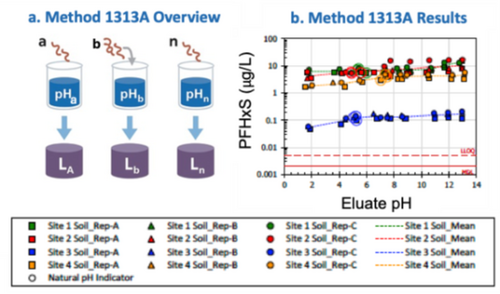
Figure 1: Figure 1. a) Overview of LEAF Method 1313A and b) PFHxS leaching as a function of pH
[1]. Definitions: lower limit of quantification (LLOQ) and method detection limit (MDL)
Draft Method 1313A was used to evaluate pH-dependent leaching in PFAS-contaminated soils in parallel batch extractions where each set of batch reactors is prepared and equilibrated at different pH (Figure 1). Short-chain PFAS (≤6 fluorinated carbons) generally showed little to no variation in leaching across the tested pH range of 2-13 (e.g., PFHxS, Figure 1), whereas long-chain PFAS exhibited increased leaching at higher pH[1]. This trend is consistent with previous findings showing that soil-water partitioning coefficients (Kd) decrease as pH increases (e.g., Higgins and Luthy 2006)[5]. The most pronounced pH effects were observed for perfluoroalkyl sulfonamides (FASAs) such as perfluorooctane sulfonamide (FOSA), which transition from neutral to anionic forms within the circumneutral pH range (~pH 6). The anionic form has a lower Kd and results in higher leaching concentrations[1][6]. For many site management scenarios where pH is circumneutral, variations in anionic PFAS leaching are expected to be small over the relevant pH range. In such cases, when testing time and costs are primary considerations, Method 1313A may be a lower priority relative to evaluating leaching as a function of L/S (Method 1316A, Method 1314A). Different considerations may be needed where FASAs or PFAS with multiple, ionizable functional groups (i.e., zwitterions) are of concern.
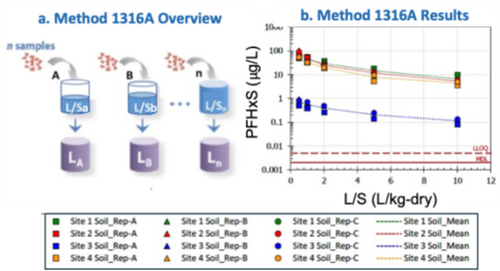
Figure 2: a) Overview of LEAF Method 1316A and b) PFHxS leaching as a function of L/S ratio evaluated in parallel batch leaching vessels
[1]Draft Method 1316A was used to evaluate L/S-dependent leaching of PFAS in impacted soils using parallel batch extractions where each set of batch reactors is prepared and equilibrated at a different L/S. (Figure 2). Methods 1314A and 1316A are similar in intent as they both evaluate leaching as a function of L/S; however, the experimental approach differs. Method 1314A uses a flow-through column configuration (Figure 3; discussed further below). Method 1314A may better simulate field conditions, but Method 1316A is simpler and less costly to implement. Trends in Method 1314A and 1316A are expected to be qualitatively similar but leaching concentrations are expected to exhibit differences. Despite this, leaching studies comparing Methods 1314A and 1316A for inorganics showed that cumulative release results were within one order of magnitude[7].
Method 1316A and Method 1314A may also provide different insights into transport mechanisms. Because Method 1316A is performed using equilibrated batch reactors at varying L/S, results can be used to develop equilibrium desorption isotherms and calculate desorption coefficients (e.g., Kd,desorption). Studies have shown that Kd,desorption values for PFAS may be greater than Kd, an effect often attributed to desorption hysteresis[8]. Consequently Method 1316A provides a straightforward method to estimate site-specific desorption parameters. Although sorption parameters can also be inferred from column (Method 1314A) data, interpretation is often complicated by nonequilibrium processes. Conversely, the column data can be valuable for quantifying those additional mechanisms providing transport parameters that can describe rate-limited transport (e.g., fraction of non-equilibrium sorption sites and sorption rates) and other dynamic behavior.
As anticipated, trends in PFAS leaching obtained during the Method 1316A and Method 1314A demonstrations were qualitatively similar. These are further discussed below.
Column Test Demonstration Studies
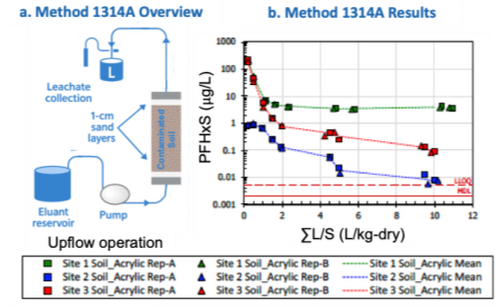
Figure 3. a) Overview of LEAF Method 1314A and b) PFHxS leaching as a function of ∑(L/S) evaluated in saturated up-flow column tests
[1]. Note that acrylic here simply refers to the column material of construction used in this round of Method 1314 testing.
PFAS-specific adaptations were tested in column test demonstration studies, which included triplicate implementation of Method 1314A in three AFFF-impacted site soils.
Draft Method 1314A was implemented in saturated, up-flow columns to evaluate leaching of PFAS as a function of cumulative L/S (∑(L/S)); Figure 3; total volume of water that has passed through the column divided by the soil mass in the column). As noted, the intent of Method 1314a and 1316a is similar, and in both tests, similar qualitative results were observed. For example, short-chain PFAS exhibited high initial concentrations that decreased rapidly. However, in Method 1314a, these rapid drops in short-chain PFAS tended to occur by ∑(L/S) ≈ 2 (e.g., Site 1 and 3 soils, Figure 3) whereas in some cases, such as for PFHxS, Method 1316A produced slightly flatter elution curves than Method 1314A (Figures 2b and 3b). Long-chain PFAS generally displayed flatter elution profiles than short-chain PFAS across both methods. These trends are consistent with chain length dependent sorption documented in the literature[5][6][9]. Although column modeling is beyond the scope of this article, prior studies have shown that saturated transport can be influenced by rate-limited desorption, particularly for long-chain PFAS[10][11]. As noted, data from Methods 1316A and 1314A can support estimation of transport parameters representing equilibrium and nonequilibrium behavior, respectively.
LEAF Screening Evaluations
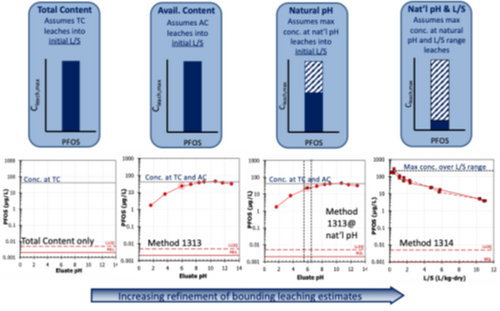
Figure 4. Example screening assessment for perfluorooctane sulfonate (PFOS) using total content and data from Methods 1313A and 1314A. Figure format adapted from Garrabrants
et al. 2021
[12].
LEAF provides a standardized, robust approach for evaluating PFAS release from impacted granular materials under a range of environmental conditions. The tests are complementary, capture a range of conditions, and vary in ease of implementation. This provides the flexibility for users to select the test or test combinations that best suit their project objectives, timeline, and budget. A common use of LEAF data is in screening level assessments. These are stepwise assessments that establish increasingly refined maximum leaching concentrations, Cleach,max (Figure 4), which can then be compared to regulatory limits such as maximum contaminant levels, when available. For example, a stepwise screening assessment might include:
- Assume the maximum leaching concentration is represented by the total content (total initial mass of contaminant present) leaching into the first L/S.
- Assume only the available content leaches into the first L/S where available content is the maximum mass released over pH 2-13 measured using Method 1313a. For many PFAS, total content is equal to available content meaning that all of the PFAS mass is available for leaching.
- Assume the leaching concentration at natural pH (measured in Method 1313A at natural pH or Method 1316A at L/S of 10) is maximum leaching concentration adjusted to the first L/S.
- Consider the maximum leaching concentration over the L/S range (Method 1314A or Method 1316A) and the upper estimate of leaching, or Cleach,max, is the concentration from either Step 3 or Step 4, whichever is greater.
Screening assessments may be sufficient to meet project goals, but when additional refinements of leaching estimates are needed, site-specific data (e.g., infiltration) can be combined with test data and computational approaches (e.g., fate and transport models) for more site-specific estimates of leaching. Example scenarios where LEAF may be used to evaluate PFAS-impacted solids include 1) estimating PFAS release from AFFF-impacted soils, 2) estimating PFAS release from biosolids-amended soils at land application sites, 3) providing transport parameters to model PFAS transport from the source zone to the saturated zone, and 4) evaluating PFAS release from treatment residuals such as soils or sediments treated by soil washing or thermal approaches.
Summary and Ongoing Research
The LEAF framework offers a reliable, replicable approach to evaluating PFAS release from solids. With recent adaptations for PFAS-specific considerations, LEAF methods provide valuable tools for regulators and practitioners in managing PFAS-contaminated materials and assessing long-term environmental risks. However, there are key areas of ongoing research, including:
- An interlab validation of Methods 1313A, 1314A, and 1316A in coordination with the EPA
- Optimization and demonstration of Method 1315A for use with PFAS-impacted solids
- Evaluation of an unsaturated Method 1314A protocol to assess the need for and ability of LEAF testing to capture air-water interfacial partitioning of PFAS
- Application of the total oxidizable precursor (TOP) assay for evaluating the maximum additional PFAS leaching that may occur as a result of polyfluoroalkyl precursor transformation
- Comparison of LEAF testing data to previously collected field-scale enhanced flushing data collected from the same site
Additionally, there are key areas for consideration in future research:
- Collection of paired field-laboratory data under ambient conditions to further validate the applicability of LEAF assessments for estimation of field-relevant PFAS leaching and mobility
- Consideration of biotransformation in modeling and interpretation of LEAF data, as the state of the science regarding biotransformation of polyfluoroalkyl substances to terminal perfluoroalkyl acids advances
Other LEAF Resources
There are numerous resources describing the development of the LEAF leaching methods for inorganics. They are not specific to PFAS, but are still valuable resources focused on LEAF implementation, applications, and management of LEAF data. They include:
References
- ^ 1.0 1.1 1.2 1.3 1.4 1.5 1.6 1.7 Garrabrants, A.C., Liu, F., Warne, R., DeLapp, R., Brown, L., Rubin, Z., Yawson, D., Kosson, D.S., Guelfo, J.L., Real, M.I., van der Sloot, H.A., Touati, A., Thorneloe, S., 2024. Development of Leaching Tests for Materials Containing SVOCs and PFAS, EPA 600/R-23/382, USEPA, Washington, D.C. Free Download EPA 600/R-23/382
- ^ Garrabrants, A.C., Kosson, D.S., Stefanski, L., DeLapp, R., Seignette, P.F.A.B., van der Sloot, H.A., Kariher, P., Baldwin, M., 2012. Interlaboratory Validation of the Leaching Environmental Assessment Framework (LEAF) Method 1313 and Method 1316, EPA/600/R-12/623, U.S. Environmental Protection Agency, Air Pollution and Control Division. Free Download EPA 600/R-12/623
- ^ Garrabrants, A.C., Kosson, D.S., DeLapp, R., Kariher, P., Seignette, P.F.A.B., van der Sloot, H.A., Stefanski, L., Baldwin, M., 2012. Interlaboratory Validation of the Leaching Environmental Assessment Framework (LEAF) Method 1314 and Method 1315, EPA/600/R-12/624, U.S. Environmental Protection Agency, Air Pollution and Control Division. Free Download EPA 600/R-12/624
- ^ USEPA, 2026. Hazardous Waste Test Methods / SW-846. USEPA SW-846 website
- ^ 5.0 5.1 Higgins, C.P., Luthy, R.G., 2006. Sorption of Perfluorinated Surfactants on Sediments. Environmental Science and Technology, 40(23), pp. 7251–7256. doi: 10.1021/es061000n
- ^ 6.0 6.1 Nguyen, T.M.H., Bräunig, J., Thompson, K., Thompson, J., Kabiri, S., Navarro, D.A., Kookana, R.S., Grimison, C., Barnes, C.M., Higgins, C.P., McLaughlin, M.J., Mueller, J.F., 2020. Influences of Chemical Properties, Soil Properties, and Solution pH on Soil–Water Partitioning Coefficients of Per- and Polyfluoroalkyl Substances (PFASs). Environmental Science and Technology, 54(24), pp. 15883–15892. doi: 10.1021/acs.est.0c05705 Open Access Article
- ^ Lopez Meza, S., Garrabrants, A.C., van der Sloot, H., Kosson, D.S., 2008. Comparison of the Release of Constituents from Granular Materials under Batch and Column Testing. Waste Management, 28(10), pp. 1853–1867. doi: 10.1016/j.wasman.2007.11.009
- ^ Schaefer, C.E., Nguyen, D., Christie, E., Shea, S., Higgins, C.P., Field, J., 2022. Desorption Isotherms for Poly- and Perfluoroalkyl Substances in Soil Collected from an Aqueous Film-Forming Foam Source Area. Journal of Environmental Engineering, 148(1), Article 04021074. doi: 10.1061/(ASCE)EE.1943-7870.0001952
- ^ Guelfo, J.L., Higgins, C.P., 2013. Subsurface Transport Potential of Perfluoroalkyl Acids at Aqueous Film-Forming Foam (AFFF)-Impacted Sites. Environmental Science and Technology, 47(9), pp. 4164–4171. doi: 10.1021/es3048043
- ^ Doria-Manzur, A., Gray, E.P., Streets, S.S., Guelfo, J.L., 2025. Per- and Polyfluoroalkyl Substances (PFAS) Transport from Biosolids-Amended Soils: An Experimental and Numerical Approach. Water Research, 288(Part B), Article 124674. doi: 10.1016/j.watres.2025.124674 Open Access Article
- ^ Guelfo, J.L., Wunsch, A., McCray, J., Stults, J.F., Higgins, C.P., 2020. Subsurface Transport Potential of Perfluoroalkyl Acids (PFAAs): Column Experiments and Modeling. Journal of Contaminant Hydrology, 233, Article 103661. doi: 10.1016/j.jconhyd.2020.103661 Open Access Manuscript
- ^ Garrabrants, A.C., Kosson, D.S., Brown, K.G., Fagnant, D.P., Helms, G., Thorneloe, S.A., 2021. Methodology for Scenario-Based Assessments and Demonstration of Treatment Effectiveness Using the Leaching Environmental Assessment Framework (LEAF). Journal of Hazardous Materials, 406, Article 124635. doi: 10.1016/j.jhazmat.2020.124635 Open Access Manuscript
See Also


