Difference between revisions of "Main Page"
| Line 29: | Line 29: | ||
<div id="mp-itn" style="padding:0.0em 0.5em;"> | <div id="mp-itn" style="padding:0.0em 0.5em;"> | ||
| − | <slideshow sequence="random" transition="fade" refresh=" | + | <slideshow sequence="random" transition="fade" refresh="5000"> |
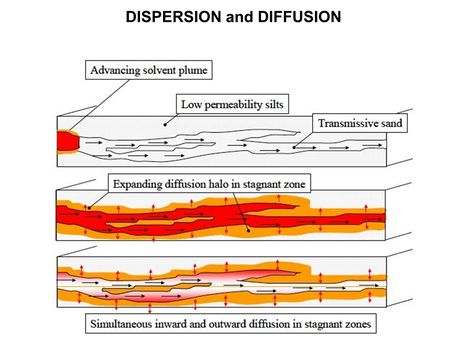
[[File:WH Picture1.JPG|thumb|center|x350px|link=Dispersion and Diffusion|Molecular diffusion slowly transports solutes into clay-rich, lower permeability zones]] | [[File:WH Picture1.JPG|thumb|center|x350px|link=Dispersion and Diffusion|Molecular diffusion slowly transports solutes into clay-rich, lower permeability zones]] | ||
| Line 75: | Line 75: | ||
*[[Dispersion and Diffusion]] | *[[Dispersion and Diffusion]] | ||
*[[Metals and Metalloids - Mobility in Groundwater | Mobility of Metals and Metalloids]] | *[[Metals and Metalloids - Mobility in Groundwater | Mobility of Metals and Metalloids]] | ||
| − | |||
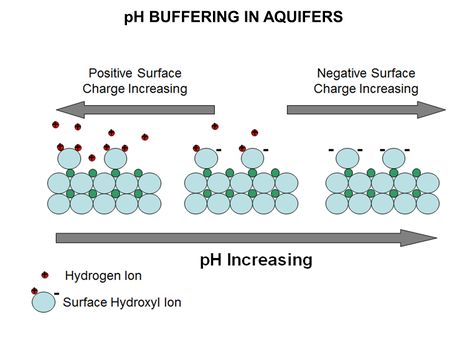
*[[pH Buffering in Aquifers]] | *[[pH Buffering in Aquifers]] | ||
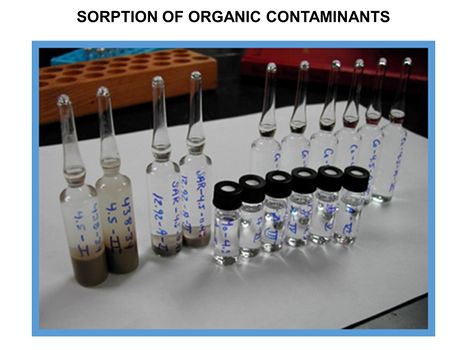
*[[Sorption of Organic Contaminants]] | *[[Sorption of Organic Contaminants]] | ||
| Line 92: | Line 91: | ||
**[[Geophysical Methods - Case Studies | Case Studies]] | **[[Geophysical Methods - Case Studies | Case Studies]] | ||
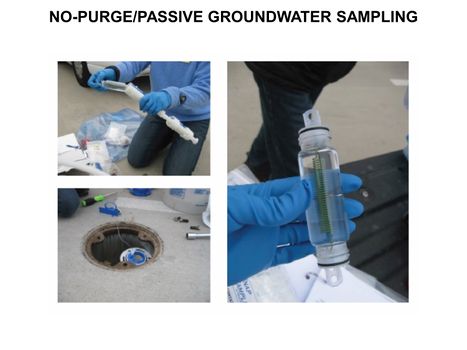
*[[Groundwater Sampling - No-Purge/Passive]] | *[[Groundwater Sampling - No-Purge/Passive]] | ||
| − | |||
*[[Long-Term Monitoring (LTM)|Long-Term Monitoring (LTM)]] | *[[Long-Term Monitoring (LTM)|Long-Term Monitoring (LTM)]] | ||
**[[Long-Term Monitoring (LTM) - Data Analysis | LTM Data Analysis]] | **[[Long-Term Monitoring (LTM) - Data Analysis | LTM Data Analysis]] | ||
| Line 114: | Line 112: | ||
*[[In Situ Treatment of Contaminated Sediments with Activated Carbon]] | *[[In Situ Treatment of Contaminated Sediments with Activated Carbon]] | ||
| + | |||
| + | <u>'''[[Light Non-Aqueous Phase Liquids (LNAPLs)]]'''</u> | ||
| + | |||
| + | *[[LNAPL Conceptual Site Models]] | ||
| + | *[[LNAPL Remediation Technologies]] | ||
| + | *[[NAPL Mobility]] | ||
<u>'''[[Munitions Constituents]]'''</u> | <u>'''[[Munitions Constituents]]'''</u> | ||
| Line 163: | Line 167: | ||
*[[Injection Techniques - Viscosity Modification]] | *[[Injection Techniques - Viscosity Modification]] | ||
*[[Landfarming]] | *[[Landfarming]] | ||
| − | |||
*[[Metal and Metalloids - Remediation | Remediation of Metals and Metalloids]] | *[[Metal and Metalloids - Remediation | Remediation of Metals and Metalloids]] | ||
*[[Remediation Performance Assessment at Chlorinated Solvent Sites]] | *[[Remediation Performance Assessment at Chlorinated Solvent Sites]] | ||
| Line 183: | Line 186: | ||
*[[N-nitrosodimethylamine (NDMA)]] | *[[N-nitrosodimethylamine (NDMA)]] | ||
*[[Perchlorate|Perchlorate]] | *[[Perchlorate|Perchlorate]] | ||
| − | *[[Perfluoroalkyl and Polyfluoroalkyl Substances (PFAS) | + | *[[Perfluoroalkyl and Polyfluoroalkyl Substances (PFAS)]] |
*[[Petroleum Hydrocarbons (PHCs)]] | *[[Petroleum Hydrocarbons (PHCs)]] | ||
*[[Polycyclic Aromatic Hydrocarbons (PAHs)]] | *[[Polycyclic Aromatic Hydrocarbons (PAHs)]] | ||
Revision as of 16:01, 17 September 2020
Peer Reviewed. Accessible. Written By Experts |
 |
| The goal of ENVIRO.wiki is to make scientific and engineering research results more accessible to environmental professionals, facilitating the permitting, design and implementation of environmental projects. Articles are written and edited by invited experts (see Contributors) to summarize current knowledge for the target audience on an array of topics, with cross-linked references to reports and technical literature. | See Table of Contents |
Featured article: Sustainable Remediation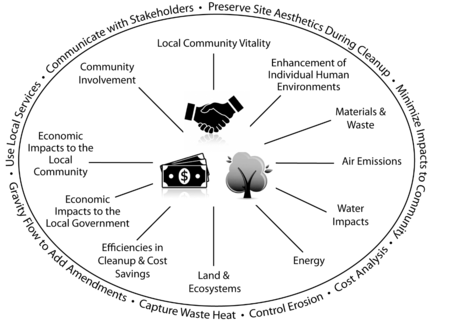 (Full article...) |
Enviro Wiki Highlights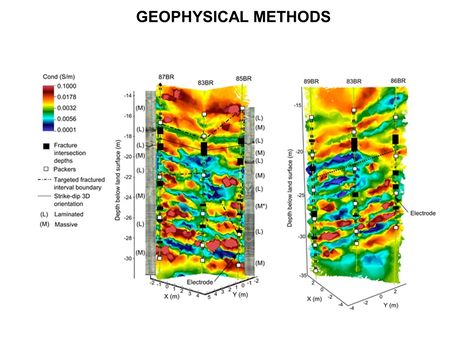 High-resolution 3D cross-borehole electrical imaging of contaminated fractured rock at the former Naval Air Warfare Center in New Jersey. Cross-borehole resistivity tomography imaging is a geophysical technique that can be used for site characterization and monitoring by observing variations in the electrical properties of subsurface materials |